Sunday, June 13, 2010

Acting East Timorese First Lady to Teach at Seoul National University

Prof.Jacqueline Aquino Siapo-De Araujo, the acting first lady of East Timor, will teach at Seoul National University from September.

The Filipino-turned East Timorese, 42 years old, is the first foreign professor hired by the Graduate School of International Studies at Korea's top university and will teach Southeast Asian history and culture and Southeast Asian politics and economy.
While teaching here, she also wants to study the background of Korea's economic development.
Korea suffered from extreme poverty and other difficulties after the Korean War in the 1950s. I want to learn how Koreans overcame the obstacles and made such economic development. I want to adapt it to my country,'' she said.
http://www.useoul.edu/news/news0101_view.jsp?idx=128902 .SNU said Siapno's field of experience in independence movements and academic career as a scholar fulfilled their requirements.
She worked for Amnesty International for the release of political prisoners, including Fernando La Sama de Araojo, who was serving a nine-year sentence for subversion. She married him in 2001, a year before East Timor gained independence from Indonesia.
"Prof.Siapno with East Timorese students in South Korea"

Siapno earned her master's degree from the School of Oriental and Asian Studies at the University of London and her doctorate from the University of California in Berkeley.

She held professional positions at universities in London, Australia, Indonesia, California and East Timor. Also, she has been a consultant with the United Nations Development Program, Oxfam, and Amnesty International.

Siapno is not the official first lady.

But because the East Timorese President Jose Ramos-Horta is single, Siapno ― whose husband is now the president of the National Parliament, the second most powerful man in the country ― has become the acting first lady, she said. http://newsinfo.inquirer.net/inquirerheadlines/nation/view/20090415-199381/E-Timor-first-lady-takes-bus-to-Pangasinan

Siapno has turned up at several domestic and international events as first lady, local media reported.


It was hard convincing people who wanted the first lady staying in the territory. But I wanted to study, do research and other academic activities without being portrayed as a political figure,'' she said. She plans to return to her country when she is needed for official duties.

*_^ Please Leave your comment and follow my Blog http://jaimitokorea.blogspot.com/ ,it is My pleasure to see your photos on my blog.
Thank you in Advance!

EAST TIMOR CLOSER THAN THOUGHT

It has been a little over a year since East Timor opened an embassy in Seoul, but very few people know that East Timor and Korea first came into contact almost 280 years ago.

The year was 1730 when a Portuguese ship named the Santa Antonio went adrift in Korea while carrying slaves from Africa and Timor to Macau.

The story, as explained by East Timor Ambassador Joao Carrascalao, goes like this: The slaves on the ship conducted a mutiny on board, killing the entire crew. Now, as free men, their biggest problem was about to start. None of them had any experience navigating a ship.

With no sailors aboard and no sailing knowledge at hand, they managed to land on Jeju Island.

“There are probably some Koreans who have Timorese blood,” said Carrascalao in an interview with The Korea Herald.

East Timor is a country that has attracted a lot of worldwide attention and empathy throughout the years, especially after they proclaimed their independence from Indonesia in 1999.

Soon after that proclamation, a violent civil war broke out claiming hundreds of thousands of lives.

The tiny Southeast Asian nation was decimated, infrastructure was destroyed, agriculture was virtually wiped out and moral was at a nadir. Responding to the humanitarian crisis, Korea dispatched the Sangnoksu Unit as part of a U.N. peacekeeping force to help in the rebuilding of the nation.

“Korean troops were very welcome and did a tremendous job not only on the military side but also in rebuilding some of our infrastructure,” said Carrascalao.


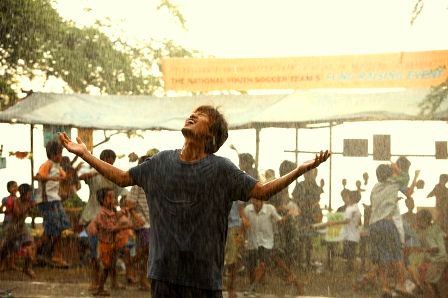
Today, both countries share a healthy relationship based on the future. A good example is the Korean-made film “A Barfefoot Dream,” which was screened at the United Nations headquarters.

The film is about a former Korean soccer player who led an East Timorese youth soccer team to two victories in international tournaments in 2004 and 2005.

“Those wins constituted a big boost for the East Timorese moral,” he said. “It was soon after the referendum for independence and the team gave us a new lease on life.”

He added that the film, which was the first movie shot in East Timor, “will certainly cause a lot more sympathy for Korea in East Timor; it boosted relations quite a lot. It’s making Korea the El Dorado for East Timorese.”

Carrascalao is hoping for exactly that, the Korean version of El Dorado for the East Timorese.

Portugal, which ruled East Timor for 450 years, is too far to help with serious building assistance, so Carrascalao is looking toward Korea and the Korean development miracle to be a guiding light for his country.

In late 1999, about 70 percent of the economic infrastructure of East Timor was laid to waste by Indonesian troops and anti-independence militias. As a result, 300,000 people fled westward. Over the next three years a massive international program, manned by 5,000 peacekeepers (8,000 at the peak) and 1,300 police officers, led to substantial reconstruction in both urban and rural areas.

“We want to learn about the Korean experience and take advantage of the know-how of Koreans so that we can build our country,” he said.

The work has already started. East Timor has about 80 of its citizens working in different sectors in Korea. Carrascalao’s intention is to increase that number to about 2,000-3,000 in the next two to three years.

“With the experience they get here they will go back to East Timor and be of good value for the development of the country.”

As it stands now, trade between both countries is virtually nonexistent. But that does not mean that there are no Korean firms located in East Timor. On the contrary, there are a few small Korean companies working in the coffee sector.

But the tiny nation does have an ace up its sleeve: black gold.

The development of oil and gas resources in offshore waters has greatly supplemented government revenues. This technology-intensive industry, however, has done little to create jobs for the unemployed, because there are no production facilities in the country.

In June 2005, the National Parliament unanimously approved the creation of the Petroleum Fund to serve as a repository for all petroleum revenues and to preserve the value of East Timor’s petroleum wealth for future generations.

“We want to diversify our market of our oil and gas,” he said. “We have good relations with Australian and American companies, but we want to look toward the Asian market. Korea is a good consumer of oil and gas and we are looking toward Korea as a good partner for this sector.”

The ambassador has held many hats throughout his life.

“When we were denied our self-determination and the Indonesians decided to invade, I had to leave the country as a persona non grata. For 24 years I was lobbying around the world for the independence of East Timor,” he explained.

Besides being an activist fighting for his country’s independence, he was also the leader of an East Timorese political party, the minister of infrastructure, a presidential candidate and at one time the country‘s prime minister.

2-0 win over Greece but tough road ahead


South Korean supporters, nicknamed the Red Devils, cheer for their team during the first Group B match against Greece at Nelson Mandela Bay Stadium in Port Elizabeth, Saturday. / Korea Times


In a surprise to a lot of experts _ and a refutation of the odds against South Korea as well _ the national team claimed a comfortable 2-0 win over Greece in its opening match. Its goal of getting through the first round, however, still remains open ended with the manager having to come up with tactics to deal with Argentina and Nigeria.

Saturday’s triumphant result brought praise from around the globe. “The Koreans look like they'll be more than a handful for Group B rivals and a good bet to advance,” Sports Illustrated said.

Against a much weaker-than-expected Greece, Huh Jung-moo’s squad maintained dominance throughout the game in style, except for some worrying moments in the middle of the second half. Headed by Park Ji-sung, Korean midfielders showed sufficient energy and inventiveness to threaten the Greeks.

Even the defence line, often questioned over its height disadvantage against tall and robust Greek attackers, played their roles to the fullest in denying a series of aerial assaults.

In many ways, the initial result was an interesting fusion of those in its previous couple of World Cups, which ended with clearly differing consequences.

Huh Jung-moo’s squad dominated the Europeans throughout the match, scoring one goal in each half, in a mirror-image repetition of its victory against Poland back in 2002, when South Korea drew with the United States and beat Portugal to advance to the round of 16 as a group winner.

In spite of another opening win, South Korea failed to make the knockout stage in a close call in 2006.

It had a flying start with a 2-1 win over Togo and managed a last-minute 1-1 draw with the runner-up France, but lost 2-0 to Switzerland in the last group match and surrendered the berth to the two European countries.

This time, the match composition had more similarity to the bitter 2006 experience: starting with a counterpart who proved to be easier to deal with, moving to the strongest group rival, and then to a decisive last match.

This means some part of the team’s outcome is likely to be out of its control with the first matches played. Currently on top with a win, South Korea will be in a very good position if Greece beats Nigeria in its next match.

However, such an expectation is meaningful only on the condition that Greece doesn't fall to the group’s doormat, like Togo did in 2006, as the first win will prove to be nothing if the Europeans end with the same result as Argentina against Nigeria.

Prevailing predictions are that South Korea will focus on strong defense against the overwhelming Argentinean attackers with the implicit aim of a draw, but some critics say that strategy could lead to a worse landslide loss that could even influence the team’s overall valor before the decisive Nigeria game.

Former Korean manager Guss Hiddink, who lifted the underdog into a surprise semifinalist eight years ago on home turf, said “fighting-fire-with-fire” could be the best strategy to deal with Argentina in a recent interview.

About the Greece match, he was quoted as saying by a local Dutch media outlet that he was sort of disappointed with the Korean performance after the first half because the team “could certainly have played better.”

Everyone expects Argentina to beat South Korea due to its reputation and higher FIFA ranking, and that’s the best opportunity for the country to make an upset over the powerhouse, the Dutchman said in an interview with the local television broadcaster KBS, which was aired here Sunday.

“That’s why Korea has to clash head to head with Argentina. You have nothing to lose,” Hiddink said.

He also said what was most important was to keep Lionel Messi at bay, adding that mission will be the key to a “winnable” match against the South Americans.

Friday, June 11, 2010

South Korea Vs Greece

Attention is being paid to how South Korea and Greece will compete in Saturday’s match as they are both strong set play, or set piece, teams.

The Greek team’s set play is considered quite challenging, due to their defenders' tall stature. Team Korea must closely watch corner kicks and free kicks by the Greek captain, Giorgos Karagounis.

Set pieces are also an important attack option for South Korea's national team. Park Joo-young, Yeom Ki-hun and Gi Seong-yong are considered key players in the soccer strategy.

Saturday’s match is scheduled to take place at 1:30 p.m., which could be a burden for players who are more familiar with night matches. Wind blowing into the stadium from the Indian Ocean could also be a variable in Saturday’s game.

The Match up between South Africa and Mexico in the 2010 World Cup in South Africa

2010 World Cup to Open on Friday

The national soccer team will play against Greece on Saturday in its first match of the 2010 World Cup in South Africa.

Team Korea arrived in Port Elizabeth on Thursday and trained for about an hour and a half at a training camp located near the Nelson Mandela Bay Stadium where Saturday’s match will take place.

During training, strikers Park Joo-young and Yeom Ki-hun were placed in the forward line along with wingers Park Ji-sung and Lee Chung-yong.

The 2010 World Cup, which is the first Word Cup to be held in Africa, will open on Friday evening, Korea time, with a match between host South Africa and Mexico. Thirty-two nations have been divided into eight groups and will first compete in preliminary rounds. The top two nations from each group will then compete for a spot in the round of 16.

Team Korea, which is in Group B, will play against Argentina on June 17th and against Nigeria on June 23rd.


The Match up between South Africa and Mexico in the 2010 World Cup in South Africa

Tuesday, June 01, 2010

The 14th Muju Firefly Festival

The Muju Firefly Festival is an eco-friendly event that not only celebrates these fascinating creatures, but also the area’s natural environment and folklore. Visitors can enjoy firefly-themed events as well as learn more about the important connection between nature and the agricultural way of life.

- Period : June 12 – 20, 2010
- Venue : Bandi-Land Area (Sport Center) in Muju, Jeollabuk-do

http://www.firefly.or.kr

The 23rd Korea World Travel Fair (KOTFA 2010)

An international travel fair that promotes the exchange of travel information, ideas, products, and services among travel professionals worldwide and the public.

- Period : June 3 – 6, 2010
- Venue : COEX C Hall, Seoul

http://www.kotfa.co.kr

The Incheon International Design Awards (IIDA)


Major international design awards?
There is the International Design Awards (IDA), or the International Forum Design Awards.
But did you know Korea has one like that too?

It’s the Incheon International Design Awards (IIDA), now entering its 7th year. For the past 7 years IIDA has been receiving increasing attention from the design industry, academia, and enterprises both at home and abroad. In 2009, as many as 3,709 submissions from 97 countries were taken, and for this year IIDA is seeking submissions from May 1 until August 25, for 117 days.
The theme of IIDA 2010 is “Green Heart,” as it attempts to generate interest and participation from global designers in spreading more eco-friendly and sustainable life style in connection with design. Prizes worth of USD 43,000 will be awarded.

IIDA 2010 seeks entries in the following 3 categories:


1) “Green Design for Human” – daily goods, home appliances, lightings, furniture, stationery, home devices, cars, packaging, etc
2) “Green Design for City” – architecture, interior design, road, items for streets, public spaces and facilities, park, urban infrastructure, etc
3) “Green Design for Communication” – poster, video, advertisement, illustration, campaign, software, mass media, networking, etc

One of the winners of IIDA 2009 is Thermodynamic Cooler- a system that preserves food by the cooling effect of evaporating water,involving no electricity http://iida.kr/


Another winner of last year's awards :MURAKAMI CHAIR- a rocking chair with a reading lamp running on electricity generated from the rocking motion http://iida.kr/

The entries will be evaluated by a judging committee comprised of Korean and international experts in the relevant fields of design. There will also be special awards – “Netizens’ Choice Award” and “People’s Choice Award (chosen by the visitors of the Incheon International Design Fair).

Despite the relatively short history, IIDA has been rapidly garnering global attention and recognition. I’m sure this year’s IIDA will be seeing even more innovative items from all over the world :)


Touring Seoul with iPhone

When we travel abroad, we usually research and gather information about those foreign places beforehand so we could be prepared.
But even so, when we’re actually there, more often than not we get encountered with situations where things aren’t quite as we expected them to be.
Providing foreign travelers with accurate, on-the-spot, easy-to-access information while they are on their tours – that’s the purpose of the web site “i Tour Seoul (www.visitseoul.net) ” run by the Seoul Metropolitan Government.

It is a digital tour guide that offers a wide range of information regarding Seoul for foreign travelers who visit and tour around the city. The services are offered through the web site as well as at the kiosks installed at various spots in the city.

Starting late 2009, the services have also been being offered, on a tentative basis, via smartphones. And starting this month, it will be expanded for common usage.
Through iphone you can now access information contained in the “i Tour Seoul” homepage – information on tourist spots, making reservations for hotels, restaurants and performances, communication support etc.

Also, the “i Tour Seoul” mobile application can perform search around the area, putting you in the center, for popular tourist sites, restaurants, public transportations and others.

One other interesting application is the one where you can take pictures of the spots you visit using your iphone and send them to your account at “i Tour Seoul” web site. And then later on, after you are done with your travel, you can download the pictures to your computer at your leisure.

These applications can be downloaded free-of-charge at the Apple App Store. And for those travelers who do not own an iphone, they can rent one at Incheon and Gimpo Airports, and also at the City Airport, Logis & Travel sites.

Transferring the entire information and functions of a web site as a mobile phone application is said to be an unprecedented tourism service.

Credits: PNCB

Saturday, May 29, 2010

National Museum of Korea ranks 1st in attendance in Asia


The National Museum of Korea succeeded in attracting the most number of visitors in Asia last year according to the findings of an art publication based in Britain in mid-May.


“The Art Newspaper,” which makes extensive coverage of the fields of art, culture and museums worldwide, revealed in its April edition that Korea’s National Museum came first in the number of visitors in Asia. The exact figure showed a total of 2,730,204 visitors in the year 2009.


The figure is the 10th largest museum attendance in the world. Taiwan’s National Palace Museum took 12th place with 2.57 million visitors and Japan’s Tokyo National Museum was in 14th place with 2.27 million visitors. The French Louvre Museum took first place with an attendance of 8.5 million.


The National Museum of Korea also excelled in the number of daily visitors, taking second place in the ancient relics display section with its exhibition “Egypt, the Great Civilization” that ran from Apr. 28 to Aug. 30.


Also in the section for Asian relics display, the National Museum of Korea ranked 7th in the world. This was for an exhibition of relics for the centennial anniversary of the Korean museum from Sept. 29 to Nov. 8. The year 2009 commemorates the 100th anniversary of the founding of the first modern museum in Korea.


The paper publicized the results on May 18, which celebrates International Museum Day and encourages museums worldwide to commemorate the event through various functions.


“This latest survey shows that the National Museum of Korea has gone beyond just representing Korea to become one of the top museums in Asia,” said museum director Choe Kwang-sik. “Ever since we moved from Gyeongbokgung Palace to Yongsan district in 2005, we have tried hard to make the museum a friendly place to visit. The effort seems to have paid off.”


Another reason for the rising popularity of the museum can be attributed to the various hands-on programs launched for the whole family and international visitors. The story-telling program and crafts class especially help young children to identify with events and relics of long time ago.


The museum is now holding its fourth exhibition dedicated a one of the world’s great civilizations. This year it presents “Gods, Heroes and Mortals: Art and Life in Ancient Greece,” from May 1 to Aug. 29, closely following other great exhibitions since 2008: “The Glory of Persia,” “Egypt, the Great Civilization” and “The Great Myth and Mystery of Peruvian Civilization, Inca.”


For more information visit the museum’s website.

Japan PM backs Seoul in seeking response to North Korea


President Lee Myung-bak, center, joins hands with Japanese Prime Minister Yukio Hatoyama, left, and Chinese Premier Wen Jiabao for a photo prior to the first round of their two-day trilateral summit at the International Convention Center in Seogwipo, Jeju Island, Saturday. The second round of talks, focusing on the crisis brewing on the Korean Peninsula following North Korea's torpedo attack on the South Korean Navy vessel Cheonan in March, will be held Sunday.


JEJU ISLAND ― Japanese Prime Minister Yukio Hatoyama pledged "wholehearted" support for South Korea Saturday in seeking an international response to North Korea's torpedo attack on a South Korean warship in March, saying Tokyo will closely cooperate with the international community in dealing with the aftermath.

At a summit with President Lee Myung-bak here prior to their trilateral talks with Chinese Premier Wen Jiabao, Hatoyama also said his government will take its own countermeasures against the reclusive nation, including a stronger inspection of money being sent to North Korea and its ships using Japan's sea lanes, Cheong Wa Dae said.

The leaders also agreed to facilitate working-level dialogue between Seoul and Tokyo to resume the talks on singing a bilateral free trade agreement, based on common understanding that the accord is crucial in fostering future-oriented and strategic partnership.

South Korea's plan to take North Korea to the U.N. Security Council (UNSC) for sanctions over the attack was high on the agenda at the meeting between Lee and Hatoyama.

Early in the morning, the Japanese leader visited the National Cemetery in Daejeon, where the 46 sailors killed in the naval tragedy are buried, and offered his deep condolences to their families.

"Prime Minister Hatoyama vowed to deal sternly with Pyongyang based on firm alliance with Seoul," said Lee Dong-kwan, senior presidential secretary for public relations. "He showed his deep respect for Lee, saying Seoul has been taking a cool-headed, well-coordinated response to the tragedy under his firm leadership."

The summit came one day after the bilateral talks between Lee and Chinese Premier Wen in Seoul.

The leaders of South Korea, Japan and China arrived on this southern resort island Saturday for three-way talks, which will continue until Sunday.

On Friday, Wen pledged to consult closely with the countries concerned to punish those behind the incident, saying China will review the results of an international investigation, released in Seoul on May 20, in a fair and objective manner.

He, however, stopped short of clarifying whether Beijing accepts the results of a probe by South Korea, the United States, Australia and Sweden.

Some observers here said Wen's remarks indicate that China may join the U.S. and its allies in censuring North Korea for the sinking of the 1,200-ton frigate Cheonan.

In separate talks with Prime Minister Chung Un-chan on Saturday, Wen expressed his condolences to South Korean people and family members of the victims for the "unfortunate incident," Chung's office said.

In the first session of the three-way summit, Saturday, the leaders agreed to set up a "cooperation secretariat" in Seoul in 2012 to strengthen, institutionalize and facilitate future cooperation among the three nations.

The deal is part of the "Vision 2020" roadmap toward a Northeast Asian community, presenting guidelines and principles of their cooperation for the next decade, according to the presidential office.

The agenda also included a proposed free trade agreement among them, and Seoul's preparations to host the G-20 Summit in November.

In the second round of talks on Sunday, the leaders will concentrate on the Cheonan issue and North Korea's nuclear program. They are scheduled to hold a joint press conference later in the day to sum up the outcome of their discussions.

Wednesday, May 26, 2010

The Most Inspiring Sport Korean Movie, ‘Barefoot Dreams’ to Release in June

To welcome the 2010 FIFA World Cup which will be hold in South Africa, Korean industry film has prepared the sport Korean movie, ‘Barefoot Dreams’ to cheer up the big event. The movie directed by Kim Tae Kyun who helmed ‘Higanjima’ (2009), ‘Crossing’ (2008), and the heartbreaking Korean film ‘A Millionaire’s First Love’, is scheduled to release in the theaters on June 24, 2010.

‘Barefoot Dreams’ is a co-production between South Korea and Japan. The movie is based on true story of former soccer player Kim Won Kwang whose life didn’t turn out quite promising. He left Korea and went to the small country of East Timor to search a new opportunity for his life. One day, he sees street kids playing ball with bare feet. Thinking that this is a good chance to embark new life by selling soccer shoes, he opens a sports stuff store, but he finally realizes none of the kids can afford those fancy shoes or jerseys. He feels despaired and is about to close up the store. Then, he decides to start teaching the kids how to play ball. Although, the East Timor youth soccer team has been in existence for only one year but will go on win two international youth soccer events with the help of Coach Kim Won Kwang. (I think it will be the most inspiring Korean movie for 2010)

Coach Kim Won Kang is portrayed by a rising actor Park Hie Sun. Park received special training as a high school soccer coach and learned parts of Indonesian and East Timor language to support his character. The filming of ‘Barefoot Dreams’ began on November 2009 in East Timor, then Moved to South Korea, and finished shooting on January 28th 2010 in Hiroshima, Japan.


http://www.the-afc.com/en/afc-u16-championship-2010-schedule-results?view=Competitions&id=374

Tuesday, May 25, 2010

NK threatens to cut all relations with South Korea

North Korea said Tuesday that it will cut all relations with South Korea and will have no contact with the Southern authorities during the remaining tenure of President Lee Myung-bak.

In a statement issued by the Committee for the Peaceful Reunification of Korea, the North vowed to sever all communication links with the South and expel all South Korean personnel from the inter-Korean industrial complex in the North's border town of Kaesong.

The North also pledged to freeze and dismantle the Consultative Office for South-North Economic Cooperation in the Kaesong Industrial Zone while completely suspending the work of Panmunjeom Red Cross liaison representatives.

The statement went on to say that Pyongyang will ban South Korean ships and airliners from passing through the North's territorial waters and air, in addition to starting an all-out counterattack against the South's anti-North psychological warfare.

"The Committee for the Peaceful Reunification of Korea formally declares that from now on it will put into force the resolute measures to totally freeze the inter-Korean relations, totally abrogate the agreement on non-aggression between the North and the South and completely halt the inter-Korean cooperation," said the statement carried by the North's Korean Central News Agency.

"All the issues arising in the inter-Korean relations will be handled under a wartime law," the statement said, strongly denouncing President Lee over his earlier statement holding the North responsible for a torpedo attack on the South's patrol ship Cheonan near the western sea border on March 26.

On the other hand, the U.S. State Department said that North Korea's threat to sever all ties with South Korea will only undermine the livelihood of the people of the isolated, impoverished state, Yonhap News reported in Washington.

"I can't imagine a step that is less in the long-term interest of the North Korean people than cutting off further ties with South Korea," spokesman Philip Crowley was quoted as saying. "I think it's odd. South Korea is one of the most dynamic economies in the world. North Korea is a failing economy even by their own admission. North Korea is unable to care for its citizens. It's unable to feed its people."

Tensions on the Korean Peninsula have flared after a multinational investigation concluded last Thursday that a North Korean submarine slipped into the South's waters near their Yellow Sea border and attacked the Cheonan with a torpedo.

North Korea, which has strongly denied any involvement in the sinking, has threatened to wage an "all-out war" if there are any attempts to punish the North.

"The DPRK had already solemnly declared that it would regard the South's anti-DPRK smear campaign over the sinking of the warship as a declaration of a war against the DPRK and mete out a merciless and strong punishment if the group dare defile its dignity," said the North's statement, using the abbreviation of its official name, the Democratic People's Republic of Korea.

"The army and the people of the DPRK and all other Koreans will never pardon the group of traitors as it is finally bringing the dark clouds of war to hang over the Korean Peninsula, wantonly violating the historic June 15 joint declaration and the October 4 declaration and bringing the inter-Korean relations to a total collapse," it said, calling President Lee a "traitor."

The latest statement from Pyongyang came as South Korea has been trying to drum up international support to punish North Korea for the deadly attack that killed 46 South Korean sailors, and bring the case to the U.N. Security Council for possible sanctions.

On Monday, President Lee and his ministers announced a slew of punitive measures against the North, including halting trade with the impoverished neighbor, banning commercial North Korean ships from passing through southern waters, resuming anti-Pyongyang broadcasts, and staging military and anti-proliferation drills.

The president then indicated Tuesday that South Korea will re-designate North Korea as its main enemy in its defense white paper, while Seoul's Navy announced a plan to hold an anti-submarine drill later this week in waters off the west coast in its first show of military force after the North's torpedo attack on the Cheonan.

The two Koreas are technically still at war, as their 1950-1953 conflict ended in a truce, not a peace treaty.

Sunday, May 23, 2010

China may change its position on Cheonan tragedy

For weeks leading to the official announcement of the Cheonan tragedy, Chinese diplomats had told South Korean counterpart that brining North Korea to the U.N. body wouldn't be a good idea, according to the local JoongAng Ilbo newspaper Saturday.

"For weeks, Chinese diplomats in Seoul told diplomats from other countries in South Korea that taking the matter to the U.N. would 'upset' North Korea. So, it would not (be) a good idea," it said citing an unnamed source.

However, China is now showing signs of subtle changes after the official announcement on Thursday by international inspectors that held North Korea as the culprit for the deadly naval attack.

"China's attitude has changed compared to before," an unnamed South Korean government official told the newspaper.

"In the past, its stance was not to take the matter to the U.N. Security Council. But now, they have become more prudent," the official said.

The official declined to elaborate on how the Chinese have changed.

China is expected to state its official stance by the time of the East Asian Summit where Chinese Premier Wen Jiabao will meet his counterparts from South Korea and Japan, it said.


Credits: Koreatimes