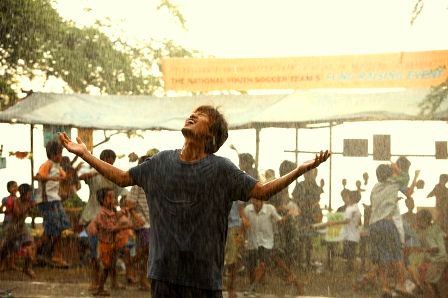
It has been a little over a year since East Timor opened an embassy in Seoul, but very few people know that East Timor and Korea first came into contact almost 280 years ago.
The year was 1730 when a Portuguese ship named the Santa Antonio went adrift in Korea while carrying slaves from Africa and Timor to Macau.
The story, as explained by East Timor Ambassador Joao Carrascalao, goes like this: The slaves on the ship conducted a mutiny on board, killing the entire crew. Now, as free men, their biggest problem was about to start. None of them had any experience navigating a ship.
With no sailors aboard and no sailing knowledge at hand, they managed to land on Jeju Island.
“There are probably some Koreans who have Timorese blood,” said Carrascalao in an interview with The Korea Herald.
East Timor is a country that has attracted a lot of worldwide attention and empathy throughout the years, especially after they proclaimed their independence from Indonesia in 1999.
Soon after that proclamation, a violent civil war broke out claiming hundreds of thousands of lives.
The tiny Southeast Asian nation was decimated, infrastructure was destroyed, agriculture was virtually wiped out and moral was at a nadir. Responding to the humanitarian crisis, Korea dispatched the Sangnoksu Unit as part of a U.N. peacekeeping force to help in the rebuilding of the nation.
“Korean troops were very welcome and did a tremendous job not only on the military side but also in rebuilding some of our infrastructure,” said Carrascalao.

Today, both countries share a healthy relationship based on the future. A good example is the Korean-made film “A Barfefoot Dream,” which was screened at the United Nations headquarters.
The film is about a former Korean soccer player who led an East Timorese youth soccer team to two victories in international tournaments in 2004 and 2005.
“Those wins constituted a big boost for the East Timorese moral,” he said. “It was soon after the referendum for independence and the team gave us a new lease on life.”
He added that the film, which was the first movie shot in East Timor, “will certainly cause a lot more sympathy for Korea in East Timor; it boosted relations quite a lot. It’s making Korea the El Dorado for East Timorese.”

Carrascalao is hoping for exactly that, the Korean version of El Dorado for the East Timorese.
Portugal, which ruled East Timor for 450 years, is too far to help with serious building assistance, so Carrascalao is looking toward Korea and the Korean development miracle to be a guiding light for his country.
In late 1999, about 70 percent of the economic infrastructure of East Timor was laid to waste by Indonesian troops and anti-independence militias. As a result, 300,000 people fled westward. Over the next three years a massive international program, manned by 5,000 peacekeepers (8,000 at the peak) and 1,300 police officers, led to substantial reconstruction in both urban and rural areas.
“We want to learn about the Korean experience and take advantage of the know-how of Koreans so that we can build our country,” he said.
The work has already started. East Timor has about 80 of its citizens working in different sectors in Korea. Carrascalao’s intention is to increase that number to about 2,000-3,000 in the next two to three years.
“With the experience they get here they will go back to East Timor and be of good value for the development of the country.”
As it stands now, trade between both countries is virtually nonexistent. But that does not mean that there are no Korean firms located in East Timor. On the contrary, there are a few small Korean companies working in the coffee sector.
But the tiny nation does have an ace up its sleeve: black gold.
The development of oil and gas resources in offshore waters has greatly supplemented government revenues. This technology-intensive industry, however, has done little to create jobs for the unemployed, because there are no production facilities in the country.
In June 2005, the National Parliament unanimously approved the creation of the Petroleum Fund to serve as a repository for all petroleum revenues and to preserve the value of East Timor’s petroleum wealth for future generations.
“We want to diversify our market of our oil and gas,” he said. “We have good relations with Australian and American companies, but we want to look toward the Asian market. Korea is a good consumer of oil and gas and we are looking toward Korea as a good partner for this sector.”
The ambassador has held many hats throughout his life.
“When we were denied our self-determination and the Indonesians decided to invade, I had to leave the country as a persona non grata. For 24 years I was lobbying around the world for the independence of East Timor,” he explained.
Besides being an activist fighting for his country’s independence, he was also the leader of an East Timorese political party, the minister of infrastructure, a presidential candidate and at one time the country‘s prime minister.